Thursday, June 25, 2020

Do You NEED a Word Wall?

There has been a lot of debate lately about whether a word wall is necessary in a Kindergarten classroom. Overall, the idea of a word wall is to have sight words/vocabulary words up on a wall, alphabetized, for students to access during various times throughout the day, mainly during writing. They have to know that a word is a sight word, know the first letter, and look it up on the word wall across the room to use it. You can also use the word wall for games throughout the year.

The current trend is moving toward using a Sound Wall. A sound wall is a wall where words and pictures are put up according to the first sounds on the wall. It is also used for word families, vowel patterns, and is so versatile it can be used for any new material you are teaching in reading.

I have always used a word wall. But, as of last year, I realized I wasn't using it as much because I didn't feel like the kids were using it. It was in a weird spot in my classroom (because my classroom is so small!) and the kids couldn't reach every word with a pointer, so I didn't play games with it often. What I did use it for was a sound wall. We started with our names and moved into letter/sound pictures and words that were put up. I used it for science vocabulary, and high interest words (like unicorn, video, and rainbow) for my students to use. It wasn't until recently that I realized I wasn't using a word wall at all!

I found a wonderful article about what to do to make the word wall more successful. It is by Ms. Winter's Bliss. https://mrswintersbliss.com/why-i-tore-down-my-word-wall-freebie/ She suggests having students use a personal word wall. This can be in writing folders, taped to a table or desk, in the writing center, or all over the classroom! She suggests that students are going to interact with it constantly and it will become more meaningful if they don't have to look across the room to use it.

I teach under the IRLA model and I need a sight word list to match IRLA's 1G Power Words. So, I created my own personal word wall for my students this fall.

I believe this will help with so many tasks and am excited to not have to maintain the word wall throughout the year. However, I do plan on using a sound wall. I want to differentiate between sight words and other words, so this will allow that to happenI plan on making it mobile, meaning students will be able to take vocabulary words from the wall station to their seat. It will be smaller than a word wall, and be able to be accessed at a Kinders' height.  If you take a look at Marsha McGuire's board, you can get a better idea of idea what I mean.


Separating out my sight words and vocab words will be so helpful because my Sound Wall will be changeable, mobile, and most of all, accessible. I don't know what this year will bring in the way of reading instruction, but I would like to be able to take advantage of a small class size (we will be on a hybrid model) and get down to the nitty-gritty with my reading instruction. 

Are you using a sound wall? How about a word wall? I would love to know!

Monday, June 22, 2020

Mrs. B's Reading Room - Playing Outside

Hi everyone! I have a new week of Mrs. B's Reading Room! This week we are going to explore books about playing outside! Check it out!

Monday, June 15, 2020

Mrs. B's Reading Room


Welcome to Mrs. B's Reading Room! This is my first digital classroom. I wanted it to be fun, bright, and full of books! Each week I will switch out the books for my students to access over the summer. Because Distance Learning is going to have a major effect on our students' learning, I wanted to create something light that will keep them reading through the summer.

Creating this room was so much fun. I googled how to make a 'Bitmoji Classroom' and found a lot of great resources. I have to say, https://www.remove.bg/upload was my biggest find. You can put any image in and it will remove the background so you can insert it into your room. It made it so easy!

Monday, December 2, 2019

December Cyber Monday and Tuesday Sale!

I am throwing a HUGE sale today and tomorrow, Dec 2-3! You can get 25% off!
Every file is on sale! Check it out! Click here for the sale!

Sunday, December 1, 2019

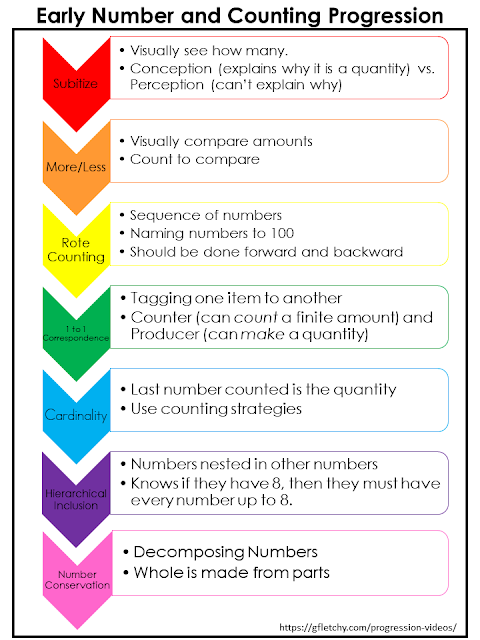
Early Number and Counting

https://drive.google.com/file/d/1v6Fdzyojwl5zd0dcVDaYuGxAK9NLJkqt/view?usp=sharing

Making sure that Kinders have the kind of number sense they need to move onto first grade can be tricky. Some might assume that if they know their standards, then they are ready. In theory, you would be right. I mean, isn't that what the standards are for?

However, there are so many steps that need to happen in order for a child to have true number sense. This chart explains how children will learn numbers and counting. The hard part is, these steps have to happen in order. And if you have a child who is struggling, it is often because he or she is missing a step in the learning progression.

Graham Fletcher has a video that explains all of this in detail. This one isn't on YouTube, so you will have to go to his site to see it, or on Vimeo.

https://gfletchy.com/progression-videos/

I have heard Deanna Jump's, Deedee Will's, and several other speak about the learning progression in early math. And everyone agrees. We need to teach each step explicitly so that every student has the foundation for math that they deserve. While it might seem like it will take too long, especially if you are following a pacing guide, it is imperative that students have these skills under their belt. As Graham Fletcher says, "It's the tortoise who wins the race." 

 Grab your progression chart here.

Tuesday, October 22, 2019

How Big is your Problem?

https://drive.google.com/file/d/1Y9ea5OA6Z721HkgrEiuggS6s-NT_md8j/view?usp=sharing

Teaching little ones how to manage their emotions is HARD! To them, everything is important because it is about them. In my class we are working on identifying our problems so we know what kind of reaction we should have when we get these problems.

I use this chart to help my kiddos visualize how big a problem really is.

https://drive.google.com/file/d/1Y9ea5OA6Z721HkgrEiuggS6s-NT_md8j/view?usp=sharing
While the visual is great, they need to be TAUGHT what is tiny, what is medium, etc. We role play a lot of scenarios that I see in class. That way the lesson is meaningful. Once the lesson is taught, you can have your student refer to the chart when a problem arises. Every class is different, and we all handle our classroom management in our own ways, but here are a few examples of what these levels mean in my class.

1. Tiny might mean you can't find your pencil. It might mean your shoe keeps coming untied. You can handle it.
2. Small might mean you are in a group you don't want to be in or didn't get a turn on the swing.You can handle it.
3. Medium might mean your friend is bothering you, or you don't remember how to spell a certain word. You try to solve the problem yourself.
4. Big might mean someone is calling you names or bullying you. It might mean you lost a pet, or a family member is very sick. You tell an adult.
5. Emergency is, well, an emergency. A lock-down, a fire, earthquake. Or it might mean you really hurt yourself and are bleeding a lot. It might mean someone else is really hurt. It might mean an adult is hurting you or someone you know. You tell an adult right away.

The teaching is what matters. Giving kids the tools to access what problems are and how to react to them is so powerful. Especially when they need to be taught a papercut is not an emergency. 😉

You download this FREE resource here.

09 10 01 09 10