Sunday, August 16, 2020

Embarking on Playful Inquiry - Day 1

I am embarking on a whole new path. The path of Playful Inquiry has been a long time coming. I have been doing parts of it for years. I have experienced WHY we need to have children learn through play. I guess I just needed the theory, the background, someone to show me the way.

What is Playful Inquiry? According to Teaching Preschool Partners and founders of Opal School at the Portland Children's Museum, Playful Inquiry "describes the human capacity to seek and make meaning of experiences through a playful stance toward learning - a stance that welcomes curiosity, imagination, and the enchanting experiences found in play."

It allows children to incorporate all senses as they learn, creates healthy habits of mind, and invites children to become thinkers, planners, doers, and reflectors. It authentically creates the skills needed to be in school (and in life) before or as they get there (physically and mentally).

Playful Inquiry is the step we lost along the way. It is the step that makes school fun, learning fun, being social fun. When we skipped this step we saw a rise in severe negative behaviors in preschool and Kindergarten. We saw more reading problems. We saw more anxiety and stress. Why did we skip this step? One word: Assessments. We needed Kindergarteners to perform. We thought that starting them earlier would make learning accelerate. What did accelerate? Everything we didn't want. Something had to be done.

So, here I am. I am following in the footsteps of Opal School, Kristi Mraz, and even Mr. Rogers. How, why, why now? Well, I hope to work through these questions. I hope to use my time during Comprehensive Distance Learning (CDL) as a soft landing, and find my way to giving students back what they lost.


Wednesday, August 12, 2020

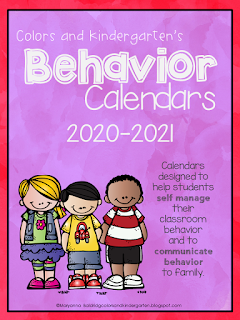
2020-2021 Behavior Calendars


I have been using Behavior Calendars in my classroom for many years now. This resource allows me to communicate to students and to families student daily behavior.
I do not use a clip chart or color chart for behavior that hangs up in the room. I feel that these types of charts only shame the child because everyone else in the class can see their behavior on display. Instead, I use these calendars, which are kept in their daily homework folders, so that I can communicate to student and parent about how the day went. I look at the overall behavior at the end of the day and record it in the behavior calendar. If a student received an uh-oh or sad face they will also receive a conference with me and a note home to their family explaining the behavior. The beauty of this is that students can always turn their day around and make the right choices. They can earn back a mistake, which is what we, as teachers, want anyway!

https://www.teacherspayteachers.com/Product/Behavior-Calendars-2020-2021-4744184https://www.teacherspayteachers.com/Product/Behavior-Calendars-2020-2021-4744184

Wednesday, August 5, 2020

Engaging Families in Literacy for PreK-2

I have been racking my brain on how to get families involved this year in their child's literacy. We are already asking so much of them with Comprehensive Distance Learning (CDL) that I feel like helping their child is going to feel like a chore! How can we help parents understand what literacy is made of and how to help their child in a fun away that is not all online. I created a little packet with some ways to help parents during this strange school year (aren't you tired of hearing "unprecedented times"?). Take a look and see if you can use any of it. For me, I am going to send home my Literacy Handbook in my Kindergarten toolkit (MORE TO COME ON THAT!) and do reading challenges throughout the year.


Wednesday, July 1, 2020

I love Reading!

I love to read! This week's Mrs. B's Reading Room is all about reading...meaning we are reading about reading! So many kids have negative connotations about reading. This is usually due to reading being difficult, or reading considered as a chore. We need to motivate our kiddos to read for pleasure. And that means we can't grade every book they read. We can't tell them every mistake or pick out ONLY books we think are best. They need to explore. Autonomy is everything for most people. You can lead a horse to water, but you can't make him drink. What you can do it encourage, model, help them find the most interesting books!
When I was a kid I loved going to the library. It was always fun to be able to pick out any book I want. I can still remember the smell! And, being a child of the 80s, I was totally into the Book It! Program. Anyone remember that? You got a free pizza or a prize after reading so many books. And you got a button sometimes!

Of course, with Covid-19 our kids can't go into a library right now. But, they can still check out books. My kids are working on Battle of the Books reading this summer. I request the book from the library and schedule a time to pick it up. Hopefully we can encourage more kids to do the same.

Thursday, June 25, 2020

Do You NEED a Word Wall?

There has been a lot of debate lately about whether a word wall is necessary in a Kindergarten classroom. Overall, the idea of a word wall is to have sight words/vocabulary words up on a wall, alphabetized, for students to access during various times throughout the day, mainly during writing. They have to know that a word is a sight word, know the first letter, and look it up on the word wall across the room to use it. You can also use the word wall for games throughout the year.

The current trend is moving toward using a Sound Wall. A sound wall is a wall where words and pictures are put up according to the first sounds on the wall. It is also used for word families, vowel patterns, and is so versatile it can be used for any new material you are teaching in reading.

I have always used a word wall. But, as of last year, I realized I wasn't using it as much because I didn't feel like the kids were using it. It was in a weird spot in my classroom (because my classroom is so small!) and the kids couldn't reach every word with a pointer, so I didn't play games with it often. What I did use it for was a sound wall. We started with our names and moved into letter/sound pictures and words that were put up. I used it for science vocabulary, and high interest words (like unicorn, video, and rainbow) for my students to use. It wasn't until recently that I realized I wasn't using a word wall at all!

I found a wonderful article about what to do to make the word wall more successful. It is by Ms. Winter's Bliss. https://mrswintersbliss.com/why-i-tore-down-my-word-wall-freebie/ She suggests having students use a personal word wall. This can be in writing folders, taped to a table or desk, in the writing center, or all over the classroom! She suggests that students are going to interact with it constantly and it will become more meaningful if they don't have to look across the room to use it.

I teach under the IRLA model and I need a sight word list to match IRLA's 1G Power Words. So, I created my own personal word wall for my students this fall.

I believe this will help with so many tasks and am excited to not have to maintain the word wall throughout the year. However, I do plan on using a sound wall. I want to differentiate between sight words and other words, so this will allow that to happenI plan on making it mobile, meaning students will be able to take vocabulary words from the wall station to their seat. It will be smaller than a word wall, and be able to be accessed at a Kinders' height.  If you take a look at Marsha McGuire's board, you can get a better idea of idea what I mean.


Separating out my sight words and vocab words will be so helpful because my Sound Wall will be changeable, mobile, and most of all, accessible. I don't know what this year will bring in the way of reading instruction, but I would like to be able to take advantage of a small class size (we will be on a hybrid model) and get down to the nitty-gritty with my reading instruction. 

Are you using a sound wall? How about a word wall? I would love to know!

09 10 01 09 10